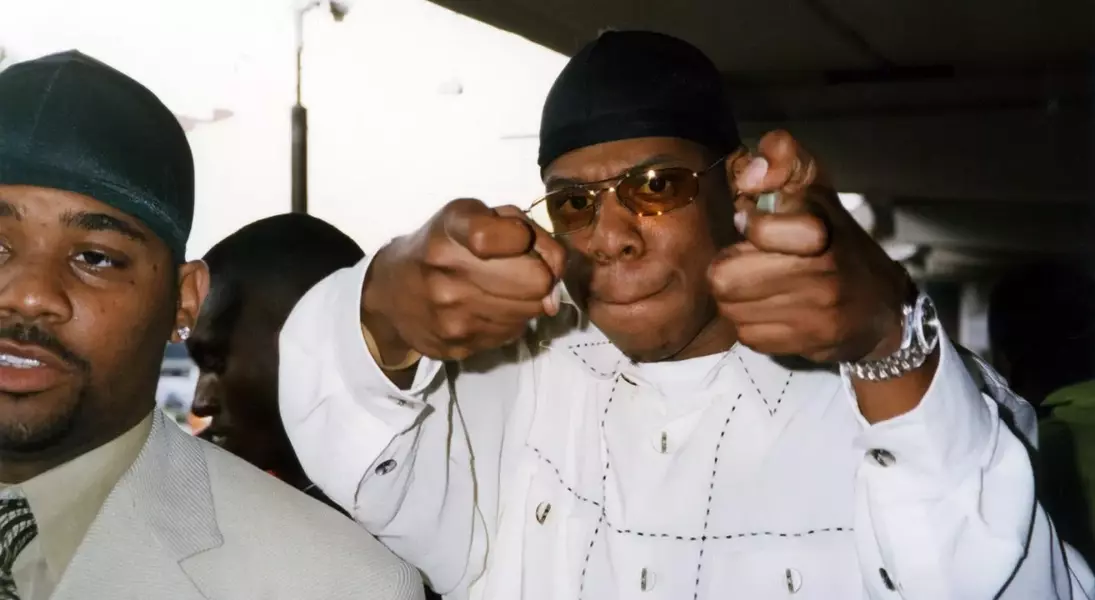
A specific moment on the final Monday of August 1997, around 5:19 p.m., stands out vividly in Dillon Moulder's memory. He was in a social gathering area near Thorpe Close in Ladbroke Grove, just moments before Jay-Z was set to grace the stage at the Notting Hill Carnival, a scene that has only grown in historical significance over time. Moulder, surprisingly, was not there in his capacity as a professional photographer. His primary role at the time was as an A&R representative for an independent label in Ladbroke Grove. His artist, the British rapper Mr45, was scheduled to perform on Tim Westwood’s Radio 1 stage, leading Moulder to be present throughout the day, engaging with various artists and label executives, and even briefly conversing with Damon Dash and Jay-Z himself. It was purely by chance that he had his camera with him, capturing a pivotal instant.
Moulder recalls the precise timing of his photograph, taken just a minute before Jay-Z began his performance. The sheer magnitude of the lineup that day was extraordinary, featuring a roster of musical heavyweights such as Jay-Z, Busta Rhymes, Common, Lil’ Kim, and many more, all converging in West London. This assembly of talent was considered unprecedented, particularly for hip-hop acts in the UK, where such a concentration of American artists on one stage was a rare occurrence. Jay-Z, then 27, was riding the wave of 'Reasonable Doubt' and preparing for 'In My Lifetime, Vol. 1'. His presence in Britain was gaining momentum, with 'Reasonable Doubt' having been licensed for release by a UK label, and previous performances, including opening for the Fugees at Wembley Arena. The anticipation for his Carnival set was palpable, despite some speculation about his evolving musical direction from his earlier 'real hip-hop' sound to a more polished style akin to the Bad Boy aesthetic of New York.
Jay-Z's performance at the Carnival, opening with tracks like 'Ain’t No…' and 'Who You Wit', showcased his burgeoning talent and gave the audience a preview of his upcoming album with songs such as 'Sunshine' and 'Streets Is Watching'. Moulder specifically remembers Jay-Z rapping lyrics from 'Imaginary Player' over Missy Elliott’s 'The Rain', potentially marking its global debut. The event's historical context also involves Tim Westwood, a dominant hip-hop DJ of that era whose Carnival stage was a major draw, despite later facing serious legal charges unrelated to the event. As Notting Hill Carnival celebrates its 60th anniversary, Moulder reflects on the changes, noting increased commercialization and stricter controls, while challenging the unwarranted association between the festival and crime. For him, the enduring vitality of the event lies in its preservation of sound-system culture and its role as a significant Black community gathering in Europe. The upcoming London shows of Jay-Z, nearly three decades later, bring a curious coincidence: his 1997 afterparty was held just under a mile from his future stadium performance venue, underscoring his remarkable longevity and sustained relevance in the music industry.
The Notting Hill Carnival serves as a vibrant testament to cultural endurance and musical evolution. It reminds us that significant moments, often captured by chance, can reveal profound historical connections and the lasting impact of artistry. The continuous celebration of music, community, and heritage, despite evolving landscapes and challenges, reflects a resilient spirit that thrives on shared experiences and artistic expression.
New